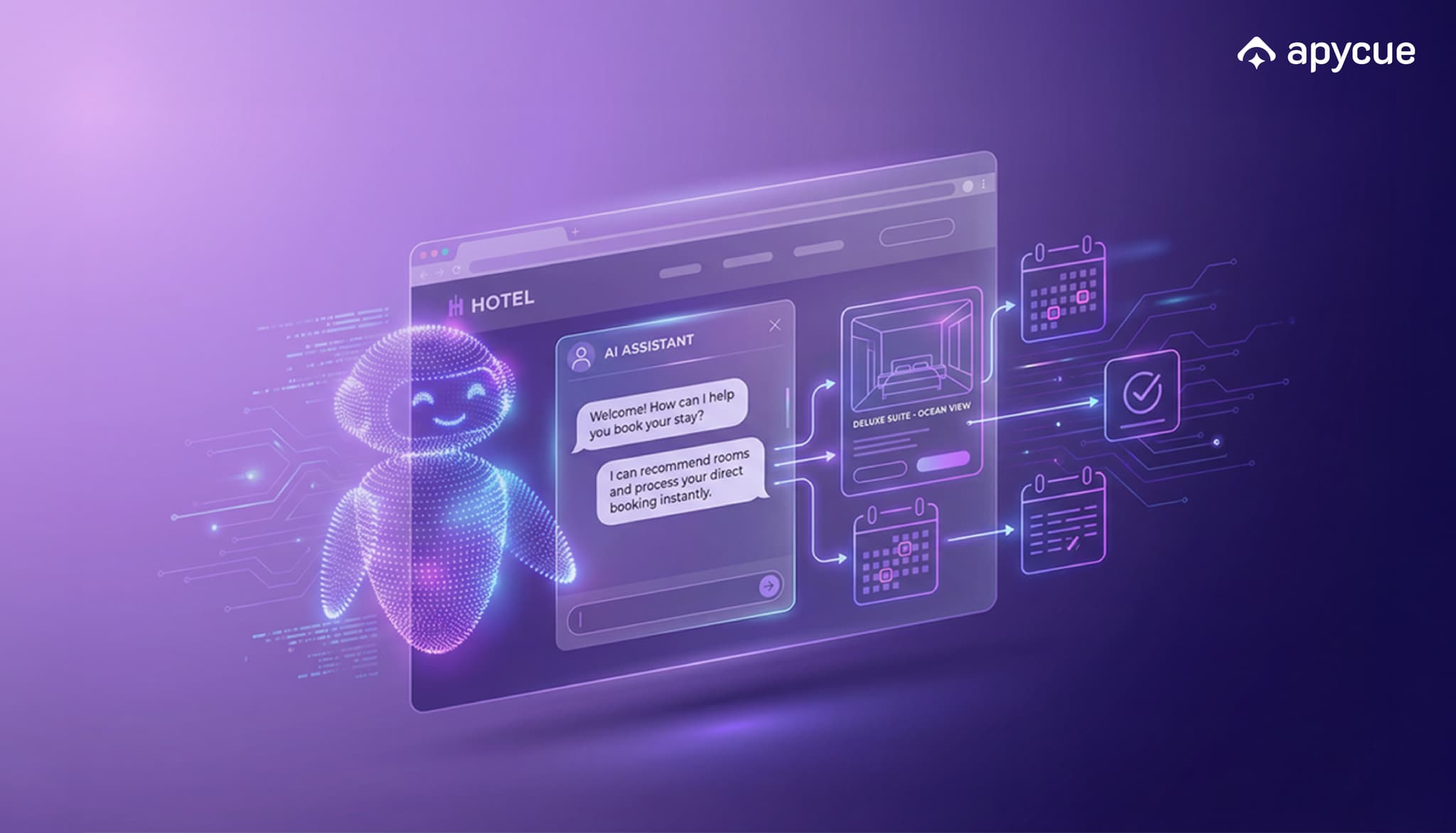
 As travel demand continues to grow, hotels are investing more in channels that bring visibility. Paid ads, social media, WhatsApp, chat tools, and conversational AI are driving more traffic and enquiries than ever before.
Yet, many hotels are still not seeing a matching increase in direct bookings.
The issue is rarely demand.
More often, the issue is what happens after the guest lands on the hotel website.
In today’s high-volume travel environment, the hotel website is expected to do a lot in very little time. It must answer questions, build trust, show availability, and help guests make a booking decision within seconds. Most hotel websites were not built for this role.
Traffic Is No Longer the Problem
For many years, hotel websites struggled with visibility. Today, that challenge has reduced. Guests now reach hotel websites through Google search, social media, paid ads, and direct links shared on WhatsApp or chat.
In the USA, 37% of travelers plan to book directly with hotels, either through a hotel website (23.5%) or by phone and email. This is higher than the global average and shows that guests are ready to book direct.
But traffic alone does not create direct bookings.
Guests often land on hotel websites that load slowly, especially on mobile. Pricing and availability are not easy to find. Booking takes too many steps. In these moments, hesitation replaces intent, and the guest leaves.
Mobile Booking Has Changed Guest Behaviour
More than 50% of hotel bookings are now completed on mobile devices. Guests are booking while travelling, comparing hotels quickly, and making fast decisions.
If a hotel website does not work smoothly on mobile, guests do not wait. They exit and move to a third-party platform that feels faster and simpler.
A hotel website that is not mobile-friendly is quietly losing direct bookings every day.
Most Hotel Websites Are Made for Viewing, Not Booking
Most hotel websites are designed like digital brochures. They focus on large images, long descriptions, and multiple pages. While these elements look good, they do not support quick booking decisions.
When a guest is ready to book, they are not exploring. They are verifying. They want to quickly see room prices, availability, cancellation policies, and basic trust signals.
If this information is not immediately visible on the hotel website, the booking journey breaks. Even small delays or confusion can stop a direct booking.
Guests Prefer Clear Information Before Booking
Guests are more likely to book a hotel when pricing, availability, policies, and trust signals are clearly shown on the hotel website. When this information is hidden or difficult to find, guests feel unsure.
Uncertainty is the biggest enemy of direct bookings.
Clear policies, transparent pricing, and visible reviews reduce confusion and help guests feel confident about booking directly on the hotel website.
Hotel Website and WhatsApp Journey Must Match
Today, many booking journeys start on WhatsApp, chat, or social media. Guests ask questions, receive answers, and are then redirected to the hotel website to complete the booking.
If the hotel website feels disconnected from the conversation, trust is lost instantly. The guest feels they have to start again.
A modern hotel website must continue the conversation smoothly. It must receive guests with context, urgency, and intent and guide them without interruption toward booking.
Too Many Systems Create Confusion
Many hotel websites suffer because different systems do not work together. The booking engine works separately from the hotel website. Policies are hidden in PDFs. Offers are outdated. Mobile and desktop experiences feel different.
This forces guests to search for information on their own. The more effort a guest has to make, the higher the chance they will leave.
Hotel websites designed as one connected system reduce confusion. Information stays consistent, actions are clear, and booking decisions feel safe.
Direct Bookings Are More Profitable
Third-party platforms help hotels get visibility, but they come at a cost. Most third-party platforms charge 15% to 30% commission per booking.
Direct bookings through the hotel website remove this cost. The hotel keeps more revenue from every booking and has better control over the guest relationship.
Direct bookings are not just better for branding. They are better for hotel profitability.
Speed Is Very Important for Direct Bookings
During peak travel times, speed is not just about website performance; it directly affects revenue.
Guests compare hotels very quickly. They do not wait for slow hotel websites or long booking flows. The hotel website that loads fast, shows availability instantly, and makes booking simple usually wins the direct booking.
Speed, mobile performance, and booking flow now play a central role in hotel website success.
Hotel Website Is Not Just Design; It Is a Booking Tool
The shift required is simple but important. A hotel website should no longer be treated only as a marketing page. It should be treated as a booking tool that helps guests decide quickly.
This means fewer distractions, clear booking buttons, real-time pricing and availability, and the same experience across all channels.
When the hotel website works as a booking tool, other investments perform better. Paid ads convert more efficiently. WhatsApp enquiries close faster. Direct bookings increase without extra marketing spend.
What Happens If Hotels Do Nothing
Hotels that continue to rely on outdated hotel websites will struggle to capture growing travel demand. Guest expectations are rising, and patience for slow or confusing websites is falling.
In today’s market, the hotel website is either helping direct bookings grow or quietly blocking them.
The difference is not design trends. The difference is how well the hotel website supports fast booking decisions.
How Hotels Can Build a Direct-Booking-Friendly Website
To increase direct bookings, hotels need to focus on mobile-first design, fast loading speed, clear pricing and availability, simple booking steps, and clearly written policies. The hotel website must work as one connected system with WhatsApp, chat, and enquiry channels.
How Apycue Helps Hotels Improve Direct Bookings
Apycue helps hotels understand where their hotel website is losing direct bookings. By analysing website performance, structure, and guest behaviour, Apycue supports hotels in building fast, mobile-friendly, and booking-focused hotel websites.
By treating the hotel website as a booking tool rather than just a design asset, hotels can reduce dependence on third-party platforms and grow direct bookings in a more sustainable way.